We're currently looking for roofing pros, suppliers and lead partners for this website. Click here for details.Typical cost Asphalt shingle roof replacement: $9,000–$18,000 per roofTypical cost Roof repair: $300–$1,500 per repairTypical cost Roof inspection: Free after stormsTypical cost Gutter installation: $600–$2,400 per homeTypical cost Flashing repair: $300–$1,000 per jobEvansville Fall tip Get an inspection before winter freeze-thaw cycles begin.Evansville Fall tip Clear gutters and downspouts before leaves pile up.We're currently looking for roofing pros, suppliers and lead partners for this website. Click here for details.Evansville Winter tip Avoid walking on icy or brittle shingles.Evansville Winter tip Watch ceilings for new stains after snow or ice.Evansville Spring tip Check shingles and flashing after severe spring storms.Evansville Spring tip Photograph any storm damage for your insurance claim.Evansville Summer tip Book replacements early; summer schedules fill fast.Evansville Summer tip Check attic ventilation before peak heat.U.S. Census Bureau Vanderburgh County, Indiana: 303 new homes permitted so far in 2026 (through August)

Prices are estimates. How we get them

Home / Blog

Stop Ice Dams Before They Start: A Fall Guide for Evansville Roofs

By Evansville Roofing Pros · October 29, 2026
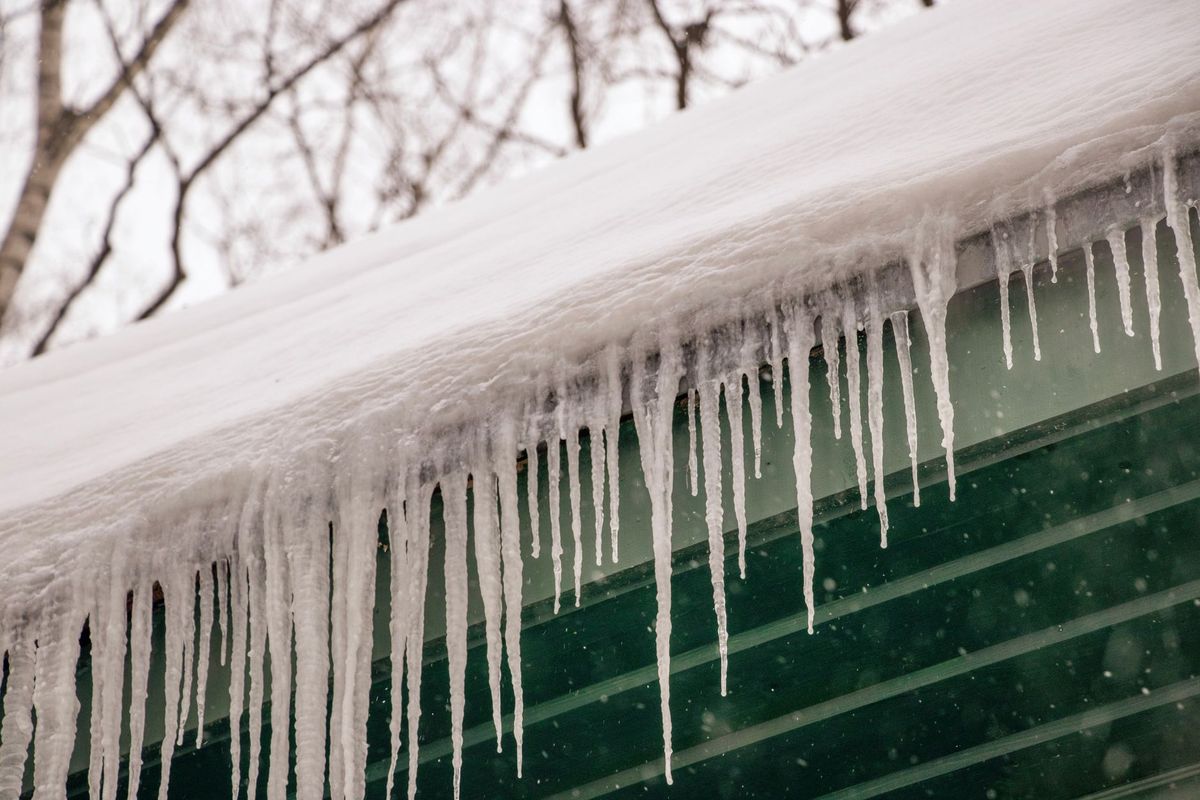
Icicles hanging from a snow-covered roof edge.
Photo: Olga Shiryaeva / Pexels, Pexels License

Icicles look nice along the roof edge, but they can be a sign of an ice dam, and ice dams can push water into your Evansville home. University of Minnesota Extension explains how they form and how to stop them. Fall, before the snow, is the time to deal with the cause.

How an ice dam forms

An ice dam needs snow on the roof, with the upper part of the roof above 32°F while the lower edge is below 32°F. Snow melts up high, runs down and freezes at the cold edge. Water then backs up behind the ice and can find its way through cracks into the house. [UMN Extension]

Where the heat comes from

That warm upper roof comes from heat escaping the house. UMN Extension says warm air leaking into the attic, for example through openings around ceiling light fixtures, is in many homes the major way heat gets there. Kitchen and bath exhausts that end just above the roof, chimneys, and leaky ducts in the attic add heat too. Recessed lights, skylights, complex roof designs and heating ducts in the attic all increase the risk. [UMN Extension]

The long-term fix

  1. Seal air leaks first between the house and the attic. [UMN Extension]
  2. Then add insulation to the ceiling or roof to cut heat loss further. [UMN Extension]
  3. Skip the attic fan. UMN Extension says mechanical attic ventilation is not recommended. [UMN Extension]

UMN suggests hiring a weatherization contractor, who should run a blower door test to see how airtight your ceiling is and may use an infrared camera to find heat leaks. [UMN Extension]

If an ice dam forms anyway

Working on a snowy roof is risky, and UMN Extension says to contact professionals for roof work. [UMN Extension]

Sources

Had ice dam leaks before?

Get a free roof inspection quote from local Evansville roofers before winter.

Get my free quoteCall now

Evansville Roofing Pros is an editorial local guide with a daily blog for Evansville, with links to local pros and associates.

More from our blog

Get Your Free Roofing Estimate

Tell us what you need and where. We usually reply the same day.

Prefer to talk? Tap to call

No obligation and no pressure.

Thanks. Your request was sent, and a local pro will be in touch soon.

Evansville Roofing Pros is an independent referral service that connects you with local roofing pros.

Share this pageTextFacebook
Call